Ein Programmvorschlag zu unserem Sonnensystem (Planetenweg)
Bei diesem Artikel handelt es sich um einen Forum Heft-Artikel und er ist als Pdf-Datei unten angefügt.
Our planetary system -
... and the best place to live in the boundless universe
A simple planetary model can give you an idea of the proportions in the universe - and of the unique place that our Creator has prepared for us in it.
Perhaps you could incorporate the following suggestions into the theme of creation. The fourth day of creation (Genesis 1:14ff), Psalm 8 or 104 are suitable for a devotional. The ideas for the experiments come from:
Robert Stevenson / Doug Lambier
A journey through the solar system
How big is our solar system? Really big! There are eight planets in it: Mercury, Venus, Earth, Mars, Jupiter, Saturn, Uranus and Neptune. According to the new definition of the planets (since August 2006), Pluto is no longer included. So the former mnemonic has to be adapted: "My father explains our night sky to me every Sunday" (or "our neighboring planets" instead of "our nine planets").
Our own planetary path
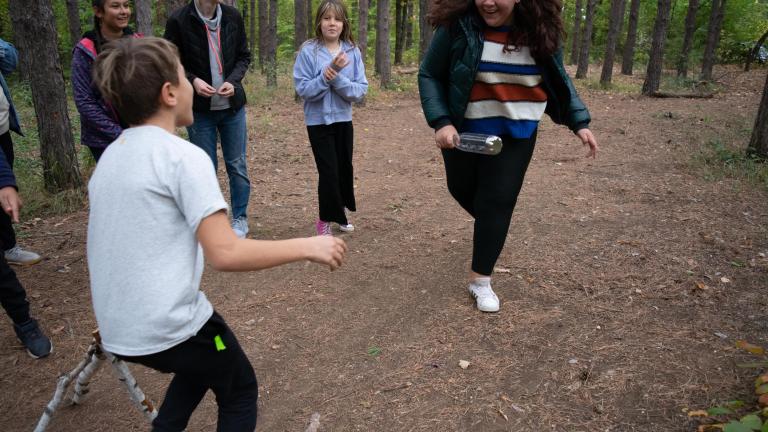
We want to get a feel for how big the planets are in comparison with each other and in relation to the sun and how far apart they are. We create a model on a scale of 1:5 billion. For this we need:
- 9 index cards (labeled with "Sun" and the names of the planets)
- possibly wooden blocks to place the planets on
- a basketball (or plastic bag filled with crumpled newspaper, the size of the basketball)
- 2 peppercorns
- 3 pins with round plastic heads
- a golf ball
- a table tennis ball
- 2 marbles
- a stretch of straight road, at least 1 kilometer long.
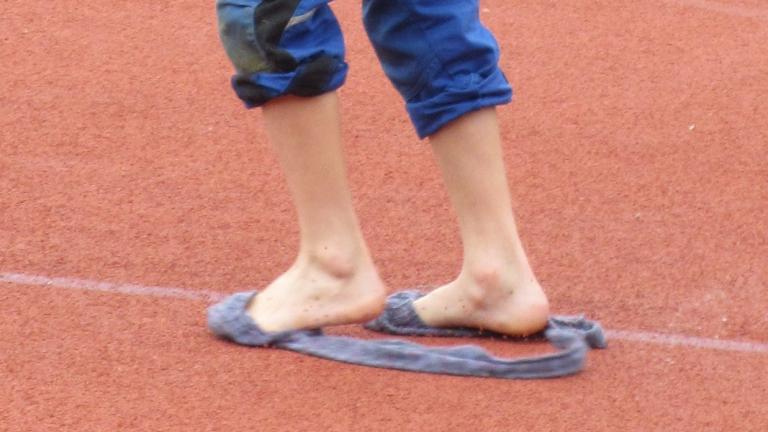
- Place the basketball (or the plastic bag stuffed with newspaper) at the starting point and place the "Sun" card next to it. The planets now follow at the following distances (each measured in large steps of approx. one meter in length):
- 11 steps to "Mercury" - pin
- 10 steps to "Venus" - peppercorn
- 9 steps to "Earth" - peppercorn
- 15 steps to "Mars" - pin
- 110 steps to "Jupiter" - golf ball
- 131 steps to "Saturn" - table tennis ball
- 291 steps to "Uranus" - marble
- 328 steps to "Neptune" - marble
- (282 steps to "Pluto")
You have reached the end of our solar system and have covered almost 6 billion kilometers!
The best place in the solar system
Our planet Earth is the best place to live in the solar system. Why is that so? Here is a series of "What if..."
Questions about the Earth, and a list of effects. Tip: Write the questions and the effects each on a card. Shuffle the cards and let the children find out the correct assignment.
What if...
1. ... the earth was a little closer to the sun?
2. ... the temperature on Earth was a few degrees lower?
3. ... the temperature on Earth was a few degrees higher?
4. ... the Earth would rotate faster?
5. ... the Earth would rotate more slowly?
6. ... the Earth would not have a neighboring planet the size of Jupiter?
7. ... the moon would be smaller?
8. ... the moon would be bigger?
The effects would be:
(The order deliberately does not match the questions listed above. Solutions see below, more on this in the book mentioned)
a) Huge waves flood the coastal areas of the whole earth.
b) The Earth is hit by numerous meteorites and comet dust.
c) Ice floes at the poles multiply and become larger and larger; the Earth freezes.
d) Large temperature fluctuations between day and night prevent life on Earth.
e) A huge greenhouse effect causes the earth to boil.
f) Powerful storms make life on Earth impossible.
g) No more tides; the coastal areas and life in the mudflats die off.
h) All life on Earth is wiped out by radiation.
Solution: 1h, 2c, 3e, 4f, 5d, 6b, 7g, 8a
Source reference

- Content and picture: Forum Kind issue 4/10 page 20. A program suggestion about our solar system (planet trail). © Copyright www.forum-kind.ch
- Author: Sabine Jäggi
- Anmelden oder Registrieren, um Kommentare verfassen zu können