
Article
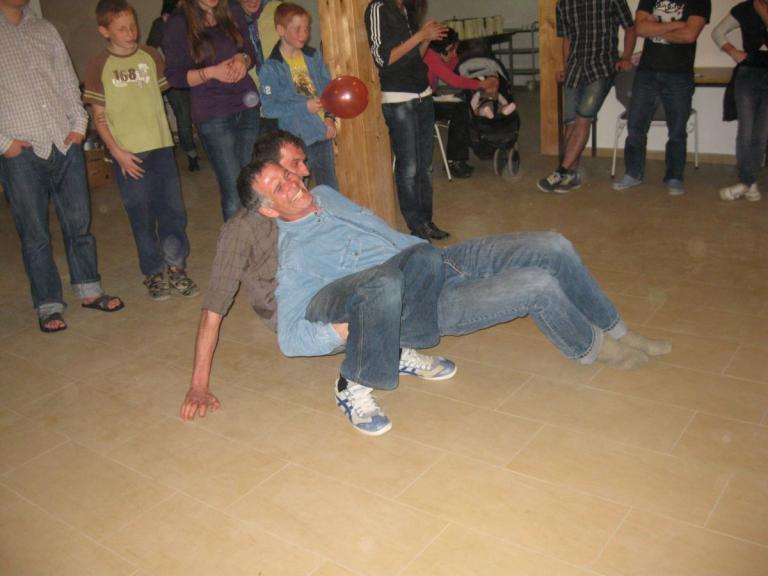
Participants are divided into two or more mixed teams based on gender, age, weight, etc.
A “battle” area is marked off—a smooth, flat surface where potentially dangerous obstacles have been removed—and two people at a time (from opposing teams) face off.
The starting position is on the back, with the soles of the feet and palms firmly planted on the ground, without the pelvis touching the ground. The goal of the two opponents is to destabilize the other by pushing, pulling, or using other strategies, without striking them. When one of them touches the ground with their pelvis, they lose and are out of the game. The team that lasts the longest in the ring wins.
No equipment is needed.
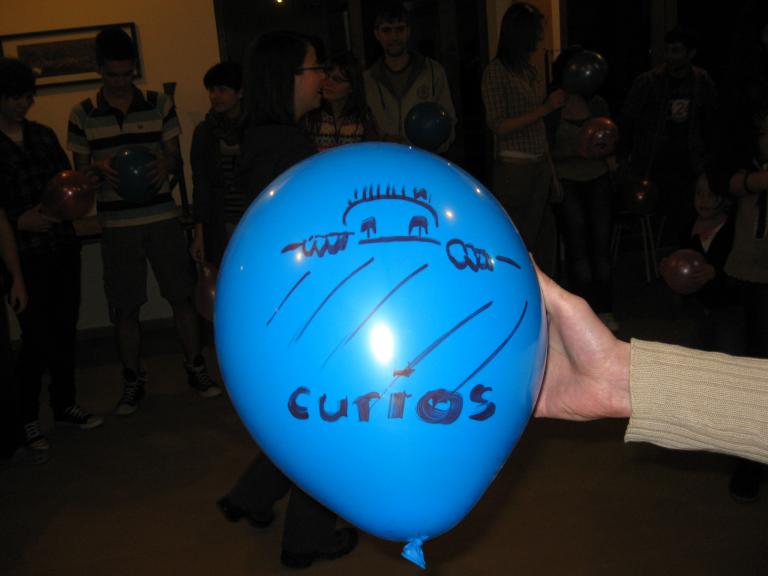
Materials needed: balloons for each participant and several markers.
Participants form a circle. Each person receives a balloon and a marker. They are invited to represent themselves with a word or image that they draw on the balloon. To keep the process from dragging on, a maximum of 5 minutes is allotted for this.
Once everyone is finished, at a signal, the balloons are thrown into the air and scattered; at another signal or when the music stops, everyone picks up a balloon. Participants have three tries to guess who the balloon belongs to and why.

Materials needed: a table (coffee table; standard), bowls (at least one or more identical ones), or circles.
Turn a table upside down; participants divide into two teams, which line up next to each other.
Mark off a throwing distance; each participant takes turns throwing the bowl or ring once to hit one of the table’s first two legs. If the throw is successful, one additional throw may be allowed. If the pot/hoop hits one of the last two legs of the table, the point is awarded to the opposing team. After 10 or more throws, the game ends and the winner is declared.
Photo source: http://bestclipartblog.com/28-table-clip-art.html/table-clip-art-2

An easy game and perfect as an Ice Breaker at the start of some activity.

There are many crimes in this world. In this program, your youth group will become the “Top Secret” intelligence agency. The children will be divided into different departments to receive specialized training for the agency. The mission: to rescue a kidnapped chemistry lab technician.
Have fun!!

Be well prepared for emergencies in the youth group. Unfortunately, even we are not immune to accidents, illnesses, or tick bites. This document is intended to help you prepare for these scenarios.

One semester is done and the next quarter is starting. But with which topic?
Here are a few suggestions.
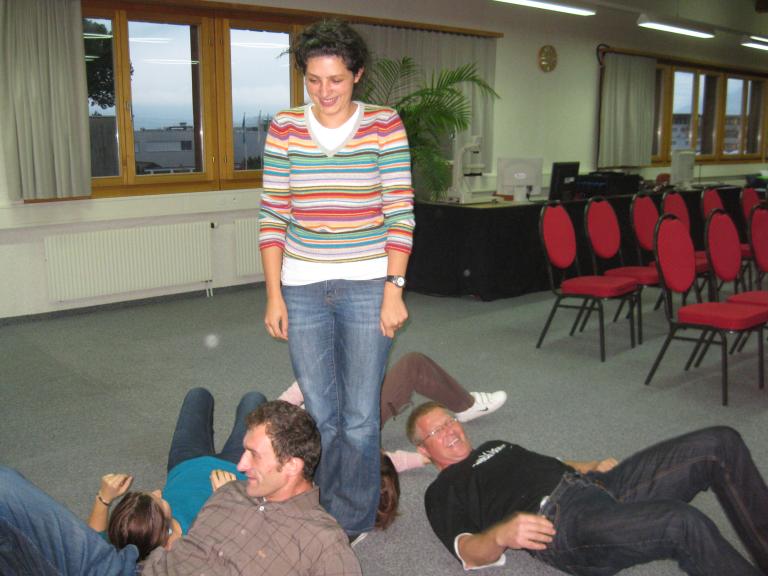
Participants are divided into teams according to their number. Preferably a team should have between 4-7 participants.
Teams compete against each other, against time and on the basis of a given task, involving all members.
The team that completes the task first accumulates points. The team with the most points wins.
The game is suitable both indoors and outdoors.
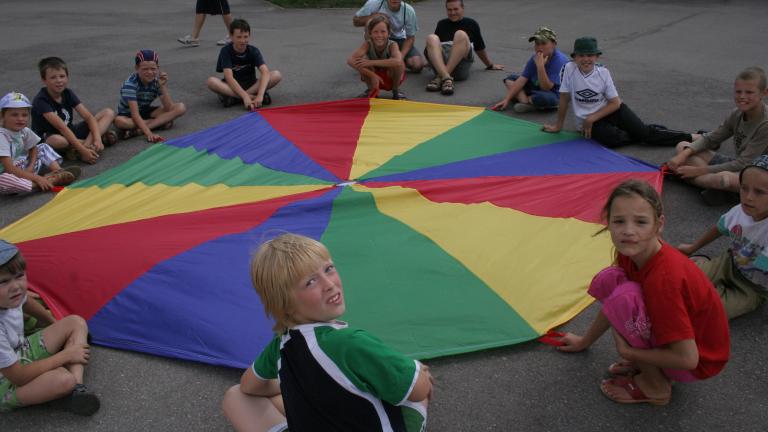
Ideas for tasks could be: working windmill (exemplified in the picture: we have the structure in the middle and the propeller is made of participants moving around the structure), rocket, fish just caught, wheelbarrow full, formula 1 car, etc.
The preparation of the game requires no material.
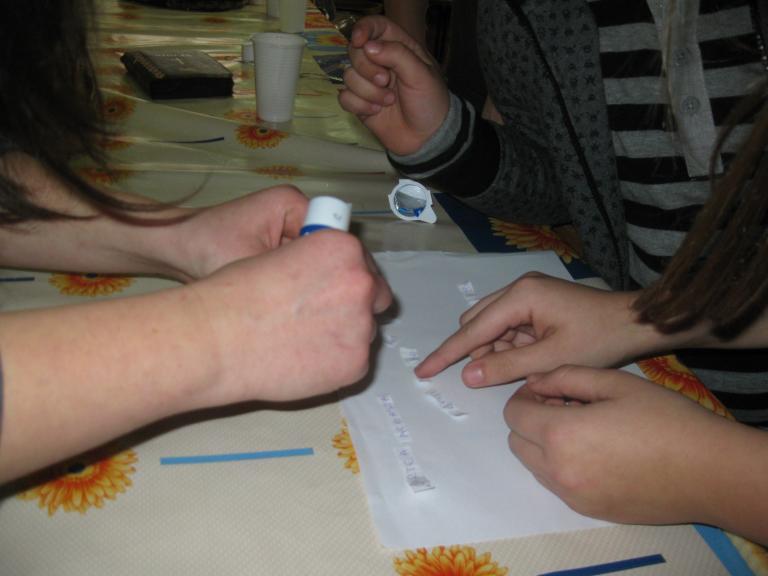
The children will be divided into two teams.
Each team designates 2 members. Of these, one will be blindfolded and the other will guide. At a distance of about 2-3 m will be placed different obstacles and two balloons (of different colors) containing the words of a Bible verse. The child, blindfolded and guided by the partner, will have to cover the distance, find the team's balloon and bring it back. The team will break it, reconstruct the Bible verse word by word and stick it on a piece of paper. The team that finishes first wins.
Extended, the activity can be organized to serve as a review game for a series of verses.
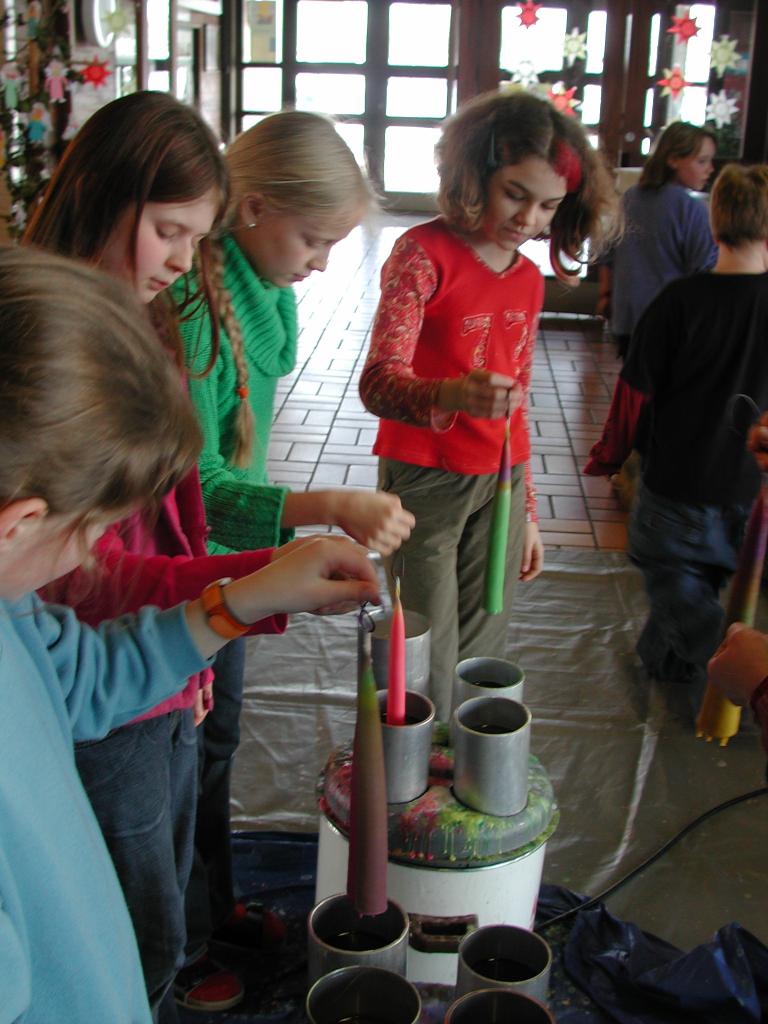
Detailed information from Horst Reder (Wels, Austria), who has been offering candle-making workshops to the public and in schools for years. It’s a powerful form of public outreach. In Austria, it has been offered during the Advent season and at Christmas markets, and the proceeds are often donated to a social project (e.g., for a guide dog...).
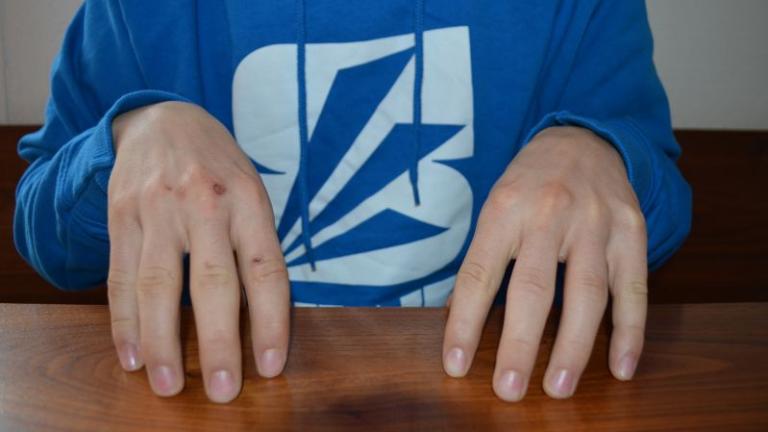
A game of skill played with a five-liber coin for a cozy evening.
Everyone sits around a table.
This document gives you a little insight into child development, specifically competencies. We often expect too much from our children, or overtax them. Even in the Jungschar work, where we do not see the children every day, it is important to know their level of development.
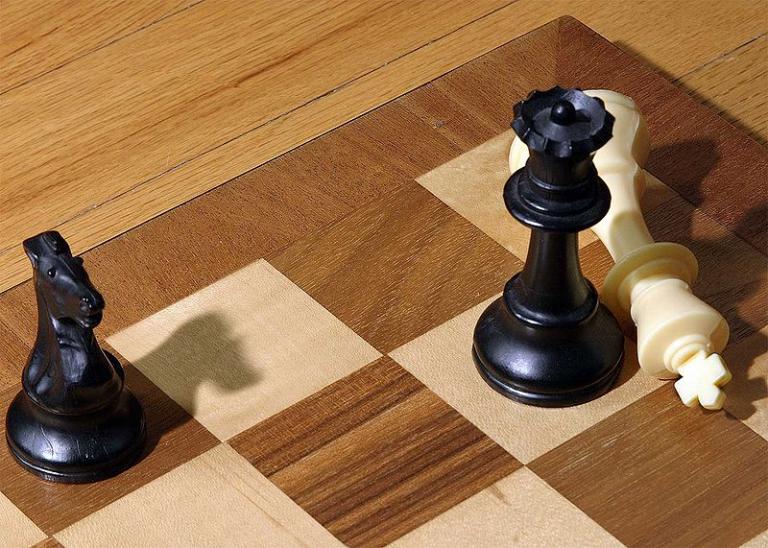
Chess—a great board game!
This ancient game has now been transformed into an action- and tactics-packed nighttime outdoor game!
Just like in the original game, the goal is to capture the opponent’s king. Each player is assigned a character with different specializations—just like in chess.
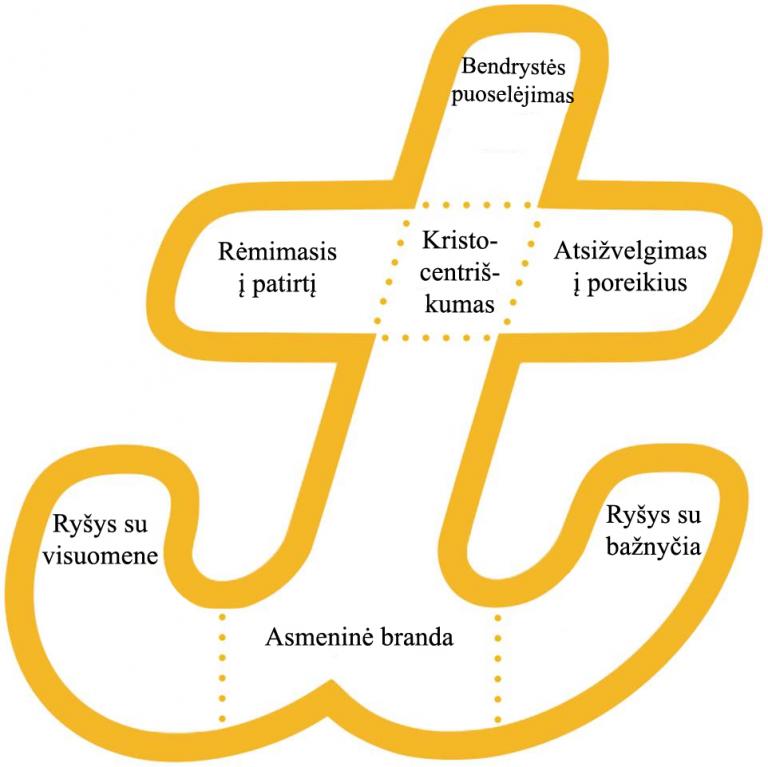
Youngstars’ activities are based on seven values: Christ-centeredness, fostering fellowship, responsiveness to needs, drawing on experience, growth, and connection with the church and society.
Youngstars seeks to support young people on their journey of personal growth, focusing on God, creation, and people.
This is achieved through seven core values of ministry:
CHRIST-CENTEREDNESS
At the heart of Youngstars’ work is the belief that Jesus Christ alone saves us from sin and grants us new life. Young people are encouraged to live in communion with Jesus Christ.
FOSTERING FELLOWSHIP
Youngstars’ activities are based on positive interaction. Children and teenagers should feel accepted and valued. Leaders and children work as a team in which everyone complements and supports one another.
RESPECTING INDIVIDUAL NEEDS
All activities are organized to reflect the characteristics of each age group, be relevant to their experiences, and be diverse and creative. The questions, needs, and individual characteristics of children and adolescents are taken seriously and treated with respect.
COMPREHENSIVENESS AND EXPERIENCE-BASED APPROACH
The goal is for children and adolescents not only to gain knowledge from the Bible, but also to have their understanding of biblical truths and other relevant topics fostered through their personal experiences and activities.
GROWTH (PERSONAL MATURITY?)
Children and teenagers are encouraged to take on responsibility. The good example set by leaders, spiritual disciplines (worship, prayer), social activities, and participation in church life help young people not to shy away from responsibility. Leaders are trained through practical ministry within the team and during courses. The goal is for them to carry out their work willingly and competently.
CONNECTION TO THE CHURCH
Every Youngstars group is part of a specific Christian community. Youngstars belongs to the universal Body of Christ and seeks to share its experiences with others. Youngstars is a tool for active church ministry (??).
RELATIONSHIP WITH SOCIETY
Youngstars’ activities also enrich society. The benefits to society include meaningful and beneficial activities, integration, as well as the prevention of alcohol, drug, and violence-related issues. Children and teenagers receive support on their personal journey toward maturity and have opportunities to develop their social skills and everyday abilities.
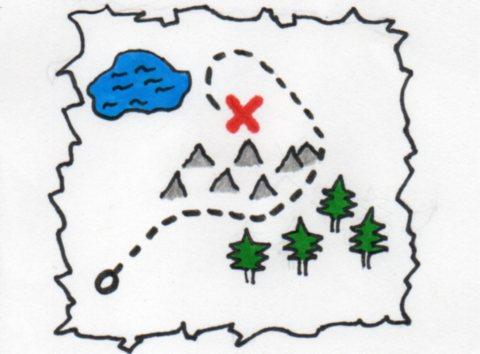
This unique game of hide-and-seek requires not only speed but also good spatial awareness.
In this game, you'll catch quite a few fish!
Are you planning to take your youth group to the pool and looking for some games you can play? Here are a few ideas.
But please be sure to follow the safety rules!
For a change, this game isn't about the cat—it's about the mouse!