Setting up restrooms at camps isn't always easy. The restroom should be easy to set up and take down, yet as hygienic and comfortable as possible. It is one of the basic camp structures.
General
Outdoor toilets, as they are typically built at most camps, are not without controversy for hygienic reasons. Especially for longer camps, sufficient time should be invested in this area to find the most acceptable solution possible.
Here is a list of points that must be considered when building camp toilets. (Most of these points apply to pit latrines.)
Construction
- The campsite owner must give their consent for the construction of toilets at a specific location
- Toilet pits should not be too deep, as the decomposition process is very slow at great depths
- The toilet pit should not be dug in clay soil
- The toilet pit should be located as far away as possible from bodies of water and water sources
- The toilet must be equipped with a privacy screen (e.g., made of scrap tarps)
- The toilet should be equipped with an “Occupied/Vacant” sign
Operation
- The toilet bowl should be treated regularly with ash or chemical substances (available at pharmacies) to prevent excessive odors or a large influx of flies.
- The toilet (surfaces that are touched) should be disinfected daily.
- Hand washing must be mandatory for all users.
Disassembly
- Before backfilling, the contents of a pit latrine should be “burned off” (using methyl alcohol or similar).
- At the end of the camp, a pit toilet must be covered with a layer of soil at least 20 cm thick.
- To prevent unpleasant surprises, the next users of the campsite should be informed of the toilet’s location.
Tip: Urinal
It’s always a good idea to set up a urinal in the woods. This can significantly reduce the strain on restrooms. The urinal is very easy to set up: Urinate into a small trench from a marked line (e.g., barrier tape). It’s important that the urinal also has a privacy screen.
Tent Toilet
The “Chnebelschissi” is the most makeshift and uncomfortable solution for a camp toilet. It should only be used on weekends or for short camps (PFILA, etc.).
To set up a knebeltoilette, dig a hole and secure a thin log horizontally in front of it. This allows you to sit on the log and relieve yourself. Optionally, the knebeltoilette can also be equipped with a backrest and a second log to sit on.
Outdoor toilet
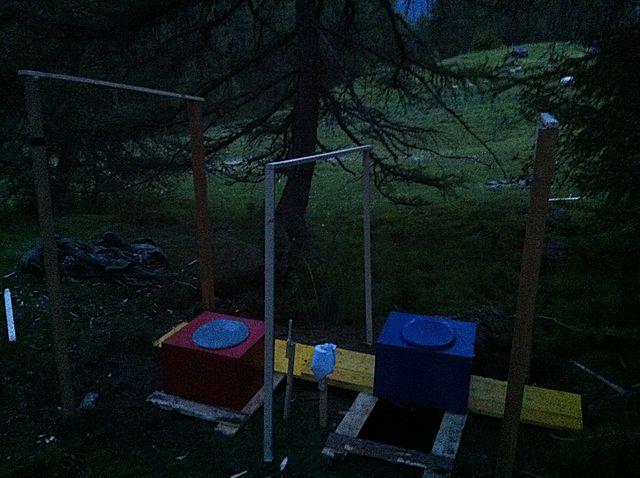
It works like the squat toilet, with the difference that you sit on a board with a recessed toilet seat. The pit latrine can be used in short-term camps and, depending on the standard of construction, also in SOLAs.
With this type of toilet, it’s possible to cover the hole (except for the toilet seat). This helps minimize odors and reduce discomfort for participants. Additionally, a small amount of lime powder should be sprinkled into the hole once a day to further minimize odors.
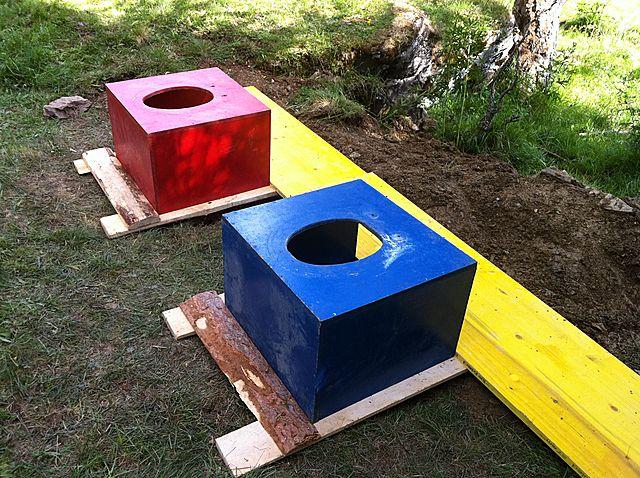
You can easily build such a toilet using a Rako box (a gray storage box from a hardware store). To do this, place the box upside down on a board with a hole cut out. A hole the size of a toilet seat is cut into the bottom of the box. If desired, a toilet seat can be screwed onto it.
Outhouse
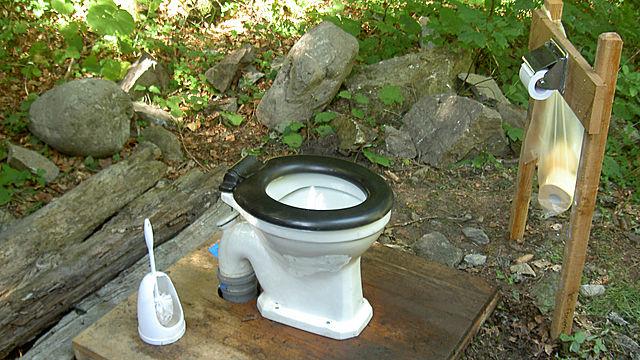
Toilet Bowl Outhouse
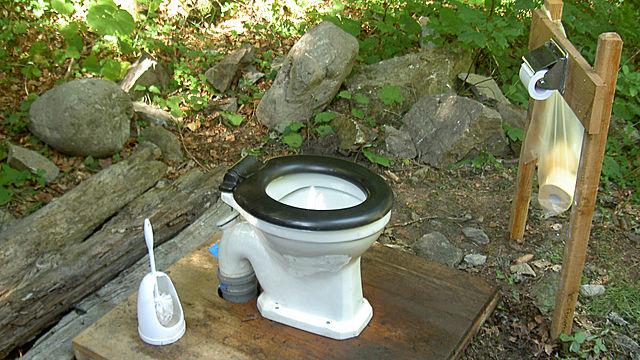
This is the Rolls-Royce of DIY toilets. Instead of a toilet seat, a toilet bowl is mounted on a solid board. This type of toilet is particularly suitable for longer camping trips (SOLA / HELA).
This type of toilet requires flushing. This means there must be a way to fill a bucket nearby. The hole must be much larger than in other toilet designs, since a significant amount of water enters the bowl during flushing.
This type of toilet produces almost no odor and is very hygienic. The only drawback is that flushing with a bucket can be a bit of a challenge, especially for younger participants.
Toilet Bowl, Outdoor Toilet
Chemical toilet
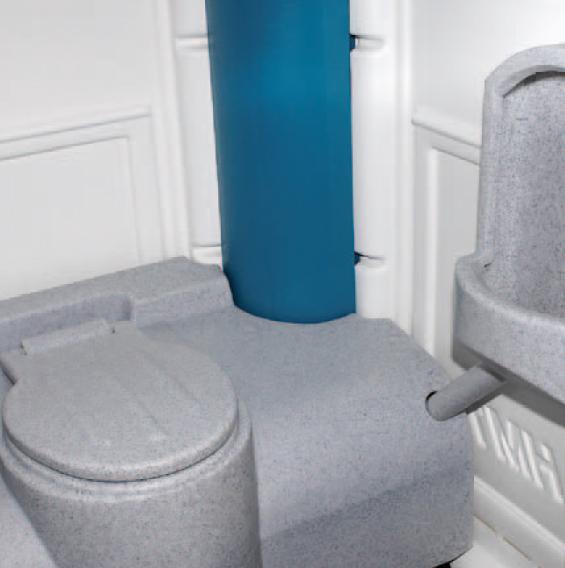
A more hygienic but not necessarily more user-friendly option is a chemical toilet designed for camping. They can be purchased for around 80.- and can also be used “indoors,” for example, in old igloo tents or in barns.
In addition to the strong odors, the main drawback of a chemical toilet is its limited capacity, which requires regular emptying. This type of toilet is suitable only for small camps at most.
Toi-Toi
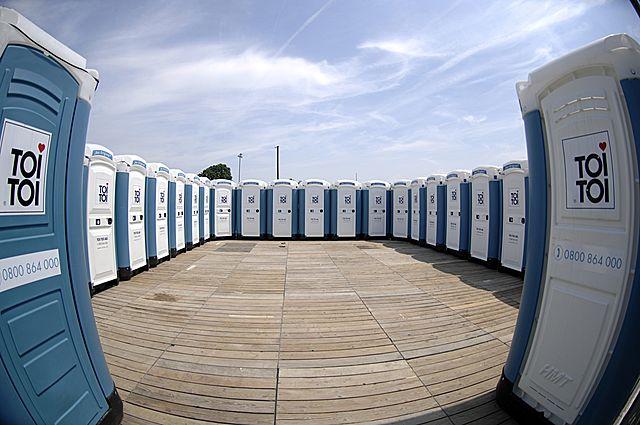
Portable toilet units are being used more and more, not just at large and long-term campsites. The only requirement is access to the campsite.
The units are delivered to the campsite by the provider and picked up again at the end. The provider is also responsible for cleaning the units and emptying the waste (which must be done at least twice a week).
Urinals can also be rented.
Recommended prices from Toi Toi AG:
Toilet stall per week: 200.-*
Cleaning and waste removal: 50.-*
*Approximate prices only; prices exclude VAT.
You can submit a non-binding price inquiry here (Toi-Toi), for example.
Toi Fresh
Source Citation
- Cover image: Courtesy of the Schinznach Youth Group / Manuel Meier
- Information/documents on portable toilets: provided by TOI TOI AG / Roland Mettler
- Pictures of the outhouse: Provided by Curdin Badertscher