What is Morse code? How does it work? What options do I have?
History
Morse code is a way to transmit messages over long distances. This alphabet was developed in 1857 by Samuel Morse, who was looking for a way to send messages via the telegraph. Today, however, the Morse alphabet is used only by amateur radio operators and, to some extent, in maritime communications.
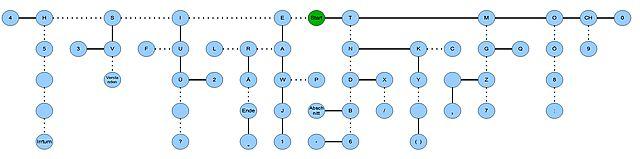
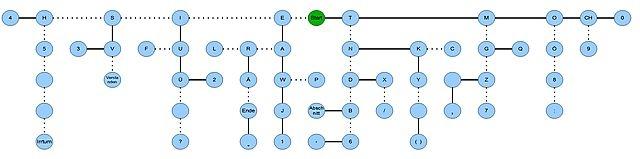
The Morse Code
Letters:
|
A .- |
K -.- |
U ..- |
Numbers:
|
1 .---- |
6 -.... |
|
Punctuation:
|
Period .-.-.- |
Question mark ..--.. |
|
Learning the Alphabet
To make it easier to memorize the alphabet, a word was assigned to each letter. A short syllable in that word represents a dot, and a long syllable represents a line.
- A: An-ton
- B: Boh-nen-sup-pe
- C: Con-di-to-
- D: Dro-ge-rie
- E: Eis
- F: Window-arch
- G: Grand-uncle
- H: Home-own-er
- I: Island
- J: hunting-mo-tor-boat
- K: Com-man-do
- L: Li-mo-na-de
- M: Motor
- N: No-tar
- O: O-vo-sport
- P: Phi-lo-so-phy
- Q: Quo-ko-ri-koc
- R: Re-vol-ver
- S: Sau-se-wind
- T: Sound
- U: U-ni-form
- V: Ven-ti-la-tor
- W: Wind-mo-tor
- X: Xo-hi-mil-ko
- Y: Yo-shi-mo-to
- Z: Zoll-vor-ste-her
Communication via Light / Sound / ...
* First, the transmitting station must establish a connection with the partner group. To do this, it sends 'ii' (.. ..) repeatedly until the other group responds with the same symbol.
* The transmitting station then sends the first letter.
* If the receiving station has successfully received the letter, it sends a '.' back; otherwise, it sends a '-'.
* If the letter was understood, the transmitting station sends the next one. Otherwise, the letter is repeated.
* When the word is complete, the transmitting station sends the character 'ii' (.. ..).
* If the transmitting station makes a mistake in the word, it sends the 'error' character (........) and repeats the word.
* When the entire transmission is complete, the transmitting station sends the character 'AR' (.-.-.).
* If the receiving station has understood the text, it sends back 'VE' (...-.); otherwise, it sends 'IMI' (..--..). In the latter case, the entire text must be sent again.
Communication Using Flags / Signs / ...
* First, the transmitting station must establish a connection with the partner group. To do this, a flag is waved in a circle until the other group responds with the same signal.
* Next, the sending station transmits the first letter (a dot corresponds to one flag; a dash corresponds to two flags side by side).
* If the receiving station successfully receives the letter, it sends a '.' back; otherwise, it sends a '-'.
* If the letter was understood, the sending station transmits the next one. Otherwise, the letter is repeated.
* When the word is finished, the sending station holds two flags one above the other.
* If the transmitting station makes a mistake in the word, it sends the “error” signal (........) and repeats the word.
* When the entire transmission is complete, the transmitting station sends the “AR” signal (.-.-.).
* If the transmitting station has understood the text, it sends back 'VE' (...-.); otherwise, it sends 'IMI' (..--..). In the latter case, the entire text must be sent again.
Forum Magazine Article
Morse code chart
References

- Contents: Forum Kind Issue 1/05, page 25. A Different Way to Communicate: Morse Code, String Telephones, and Braille. © Copyrightwww.forum-kind.ch
- Author:Tina Büchi, Director of Children’s Programs at the Chur City Mission
- Images:courtesy of Lukas Leuenberger / Jungschar Brunnen